
St. Louis, MO
7 Signs You’re Ready for Dental Implants (And What St. Louis Patients Should Do Next)
You’ve caught yourself chewing carefully on one side of your mouth again. Or maybe it’s the gap where a tooth used to be, the one you’ve been meaning to deal with for longer than you’d like to admit. Missing and failing teeth have a way of quietly reshaping daily life, from what you can eat to how confident you feel mid-conversation.
The good news: your mouth is usually telling you exactly what it needs, if you know what to look for. Below are seven of the clearest signs you need dental implants, along with what St. Louis patients can expect from the process at Dr. Waite and Associates.
Why Missing Teeth Are More Than a Cosmetic Problem
A missing tooth rarely stays a one-tooth problem. Neighboring teeth begin drifting into the open space, your bite shifts to compensate, and the jawbone beneath the gap starts to shrink from lack of stimulation. What looks like a small gap today can turn into bite alignment issues, gum disease, and accelerated tooth decay in the teeth around it within a couple of years.
That’s the real reason dental implant candidacy is worth exploring sooner rather than later, the longer a gap sits untreated, the more it can cost you in oral health, not just appearance.
Did You Know?
Within the first year of losing a tooth, the jawbone underneath can lose up to 25% of its width. Dental implants are the only tooth replacement solution that stops this bone loss, because the implant post replaces the tooth root itself, not just the visible crown.
7 Signs You’re Ready for Dental Implants
1. You have one or more missing teeth
This is the most obvious sign, but plenty of people wait years before addressing it. Whether you lost a tooth to decay, injury, or an old extraction, an empty socket is the clearest reason to ask, “do I need dental implants?” The sooner it’s replaced, the less bone loss and bite drift you’ll deal with.
2. A tooth is loose, cracked, or failing
Teeth that wiggle, ache under pressure, or have cracked below the gumline often can’t be saved with a filling or crown alone. If your dentist has mentioned extraction, that same visit is a good time to ask about implant candidacy for missing tooth replacement.
Not Every Damaged Tooth Needs to Be Removed
A loose or badly damaged tooth doesn’t always mean extraction is your only option. In many cases, treatments such as root canal therapy, crowns, or other restorative procedures can preserve your natural tooth for years. The key is understanding when saving a tooth is the healthier long-term choice and when replacing it with a dental implant provides a more predictable outcome.
Related Reading: Save vs. Remove a Tooth: What St. Louis Dentists Really Recommend explains how dentists evaluate damaged teeth and the factors that determine whether saving or replacing a tooth is the better option.
3. You’re avoiding certain foods
Steering clear of apples, steak, or corn on the cob because chewing feels unstable or painful is a quiety significant sign. Dental implants restore close to full biting force, so favorite foods go back on the menu.
4. You wear a removable partial or full denture that shifts
Dentures that click, slip, or need adhesive throughout the day are telling you the fit has changed usually because the jawbone underneath has shrunk. Implants (or implant-supported dentures) anchor directly into bone, so there’s no slipping to manage.
5. Your bite feels different than it used to
Notice your teeth meeting differently when you close your mouth, or new jaw soreness? Shifting teeth around a gap can throw off bite alignment, which can lead to jaw strain and uneven wear on healthy teeth.
6. You’re self-conscious about your smile
Covering your mouth when you laugh or avoiding photos is a real quality-of-life issue, not vanity. A missing or damaged tooth affects smile appearance and confidence more than most people expect until it’s fixed.
7. A dentist has mentioned bone loss in your jaw
If a recent exam or X-ray flagged jawbone loss near a missing tooth, that’s your dentist confirming what’s already happening beneath the surface. This is often the moment patients start asking who is a good candidate for dental implants and the answer, in most of these cases, is you.
Why It Matters: What Happens If You Wait
Delaying treatment rarely makes the decision easier. Bone loss continues, shifting teeth can complicate future implant placement, and chewing on an uneven bite puts extra wear on the teeth you still have. Gum disease risk also rises, since food and bacteria collect more easily around gaps and shifting teeth.
- Continued jawbone loss, which can require a bone graft later
- Neighboring teeth drifting or tilting into the open space
- Increased risk of gum disease around the gap
- Uneven bite pressure that wears down remaining teeth
- Fewer replacement options the longer bone loss continues
Missing Tooth Replacement Options Compared
Not every gap needs the same solution, but it helps to see how the main tooth replacement solutions stack up side by side.
| Option | Lifespan | Feels Like Natural Teeth | Protects Jawbone |
| Dental Implants | 20+ years, often lifetime | Yes — fixed in place | Yes — stimulates bone |
| Fixed Bridge | 10-15 years | Mostly, but can feel bulky | No — bone can shrink |
| Removable Partial Denture | 5-8 years | Can shift or feel loose | No — bone loss continues |
| Leaving the Gap | Worsens over time | No — bite changes | No — fastest bone loss |
The Professional Solution: How Dental Implants Work
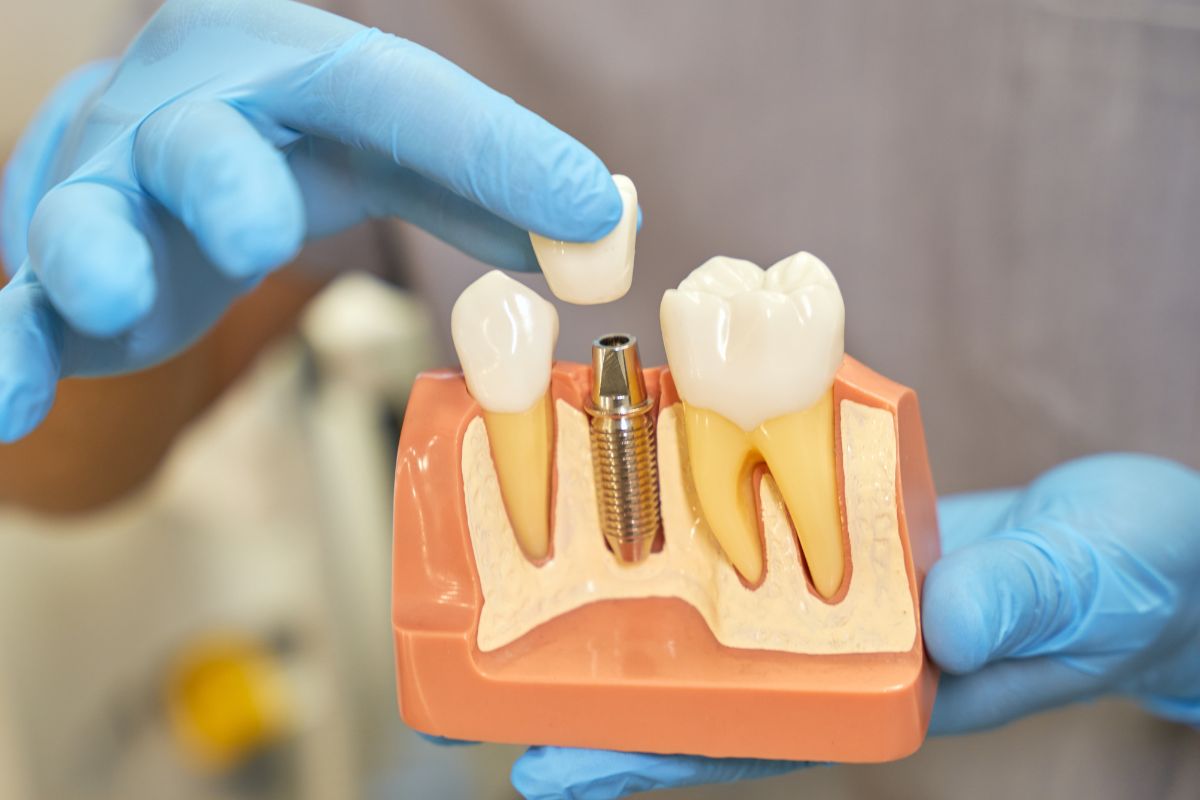
A dental implant is a small titanium post placed into the jawbone, acting as an artificial tooth root. Once it fuses with the bone over a few months, a custom crown is attached on top restoring both function and appearance. Because the post replaces the root itself, it’s the only option among tooth replacement solutions that actively preserves jawbone density.
Dr. Waite walks every patient through a full evaluation first, including imaging to check bone volume and a review of gum health, before recommending a single implant, multiple teeth replacement, or an implant-supported denture depending on the case.
⭐⭐⭐⭐⭐ Patty Morrow
“Nancy and Dr. McLain were wonderful. The entire office consistently delivers exceptional, caring and highly skilled care for their patients.”
Wondering What Recovery Is Really Like?
Many patients worry more about recovery than the implant procedure itself. Knowing what happens during healing, what foods are safe to eat, and how long each stage lasts can make the process feel much less overwhelming.
Related Reading: Dental Implant Healing Process: Timeline, Foods & What to Expect (2026 Guide) walks you through every stage of recovery, from the first 24 hours to placing your final crown, with practical tips for a smoother healing experience.
Meet Dr. Waite

Dr. Waite and the team at Dr. Waite and Associates have spent years helping St. Louis patients replace missing and failing teeth with implant solutions built to last. The practice’s approach centers on an honest, unhurried consultation every treatment plan starts with listening to what a patient wants their smile and bite to feel like again.
Schedule a consultation with Dr. Waite to talk through your options.
Not Sure Which Sign Applies to You?
A short consultation with Dr. Waite can answer the question for good with imaging, an honest assessment, and a plan built around your mouth, not a generic timeline. Call Us to Book Your Consultation at Dr. Waite and Associates
Are You a Candidate? A Quick Self-Check
Before your consultation, it can help to note which of these apply to you:
- I have one or more missing teeth I haven’t replaced yet
- A tooth feels loose, cracked, or painful under pressure
- I avoid certain foods because chewing feels unstable
- My denture or partial shifts or needs adhesive
- My bite feels different than it used to
- I’m self-conscious about how my smile looks
- A dentist has mentioned bone loss near a missing tooth
Checking even one or two boxes is a good enough reason to ask can I get dental implants at your next visit.
Local Authority: Dental Implants in St. Louis
St. Louis patients trust Dr. Waite and Associates for implant consultations that start with a real conversation, not a sales pitch. The practice takes time to explain bone health, timeline, and cost clearly, so patients leave the first visit with a plan they actually understand, whether that’s a single tooth implant, multiple teeth replacement, or a full evaluation of what’s changed in their bite over time. See what our patients say on Google reviews for a sense of what that first visit is like.
Ready to Stop Guessing and Get Answers?
If any of these seven signs sound familiar, the next right step is a conversation, not another year of working around it. Dr. Waite and Associates offers consultations for St. Louis patients ready to explore dental implants.
Schedule Your Dental Implant Consultation Today!
Frequently Asked Questions
How do I know if I’m a candidate for dental implants?
Most healthy adults with adequate jawbone and healthy gums are candidates for dental implants. Dr. Waite evaluates bone density, gum health, and overall health during a consultation to confirm candidacy and flag any prep work needed, like a bone graft.
What are the first signs I might need a dental implant?
Common early signs include a missing tooth left untreated, a loose or failing tooth, chronic tooth pain, difficulty chewing on one side, or a shifting bite. Any of these signs you need dental implants is worth a professional look before the problem grows.
Can I get a dental implant if I’ve had a tooth missing for years?
Yes, in most cases. Long-term gaps sometimes mean more bone loss, so a bone graft may be recommended first to build a stable base for the implant. It adds time but doesn’t rule out treatment.
Is getting a dental implant painful?
Patients typically describe implant placement as far more comfortable than expected. Local anesthesia numbs the area during surgery, and most people manage recovery discomfort with over-the-counter pain relief for a few days.
How long does the dental implant process take from start to finish?
Timelines vary by case, but a straightforward single implant often runs three to six months total, including healing time before the final crown is placed. Cases needing a bone graft take longer.
What’s the difference between a dental implant and a bridge?
A bridge relies on neighboring teeth for support and typically lasts ten to fifteen years. An implant stands on its own, protects the jawbone, and often lasts twenty years or more with proper care.
Will dental implants look and feel natural?
Yes. The crown is custom-shaded and shaped to match surrounding teeth, and because the implant is anchored in the jawbone, it functions like a natural tooth root when chewing and speaking.