
St. Louis, MO
Save vs. Remove a Tooth: What St. Louis Dentists Really Recommend
You’re sitting in the dental chair. The dentist has just looked at your X-ray and paused. That pause makes your stomach drop.
Is the tooth gone? Can it be saved? How much is this going to cost? These questions hit all at once and patients across St. Louis face them every single day.
The truth? Not every tooth needs to come out. And not every damaged tooth can or should be saved. The decision depends on specific clinical factors that your dentist evaluates individually. Here’s what actually goes into that decision, explained clearly.
Why This Decision Matters More Than You Think
Losing a tooth isn’t just about appearance
When a tooth is removed and not replaced, the jawbone beneath it begins to shrink a process called resorption. Adjacent teeth can drift. Your bite shifts. Over time, this creates a cascade of dental problems that can be far more expensive to address than the original issue.
That’s why dentists in St. Louis and nationally tend to lean toward saving a natural tooth when it’s clinically possible. Nothing replaces the function, feel, and long-term value of your real tooth.
When saving a tooth is the right call
Dentists look for several green lights before recommending a restoration:
- At least 50% of the natural tooth structure remains
- The root is healthy or treatable with a root canal
- There’s adequate bone support around the tooth
- The infection if any is contained and hasn’t spread
- The tooth can be restored with a dental crown or filling that will last
Did You Know?
Root canal therapy saves millions of teeth every year with a success rate of over 95% when performed properly. A tooth that has had a root canal can last a lifetime with the right crown placed over it.
Related Reading: If your dentist says the tooth can be restored, you may still wonder whether a filling is enough or if a crown is necessary. Read “Crown vs Filling: Which One Does Your Tooth Actually Need?” to understand how dentists decide between these two common treatments and what each option means for the long-term health of your tooth.
When a Tooth Cannot Be Saved
The hard truth about severe damage
Some teeth reach a point where no treatment can reliably restore them. Trying to save a tooth in these situations often leads to repeated procedures, ongoing pain, and higher total costs. Dentists will generally recommend extraction when:
- The tooth has a vertical root fracture a crack running along the root
- Severe bone loss has occurred around the root due to advanced gum disease
- The tooth has broken below the gumline with no restorable structure
- An abscess has spread beyond the root and is threatening surrounding bone or tissue
- The patient’s overall health makes complex restorative treatment risky
Removing a severely compromised tooth isn’t a failure it’s smart dental care that prevents larger problems down the road.
Save vs. Remove: A Clear Side-by-Side Guide
Use this reference to understand what dentists consider when evaluating your specific situation:
| Factor | Save the Tooth | Remove the Tooth |
| Tooth structure remaining | 50%+ intact | Less than 30% intact |
| Root condition | Healthy or treatable root | Fractured root / vertical crack |
| Bone support | Adequate bone present | Severe bone loss around root |
| Infection status | Contained / treatable | Spreading / systemic risk |
| Patient health | No contraindications | Compromised immunity or bone disease |
| Restore with | Crown, filling, or root canal | Implant, bridge, or denture |
| Cost consideration | May cost more upfront | Replacement costs more long-term |
The Risk of Delaying This Decision
Waiting makes both options worse
One of the most common mistakes patients make is waiting. A tooth that could have been saved last month may be unsalvageable this month. An infection that was once contained can spread to neighboring teeth or worse, into the jaw.
In St. Louis and beyond, dentists consistently say: don’t wait on tooth pain, sensitivity, or a visible crack. Early evaluation almost always leads to better outcomes, simpler treatment, and lower cost.
⭐⭐⭐⭐⭐ Carmen Lindsey
This was my first visit, and it was a pleasant visit. Had all X-rays, dentist check up and cleaning. Brittany was very nice and patient. Dr McClain explained what needed to be done and was very pleasant and professional.
Meet Your St. Louis Dental Care Team
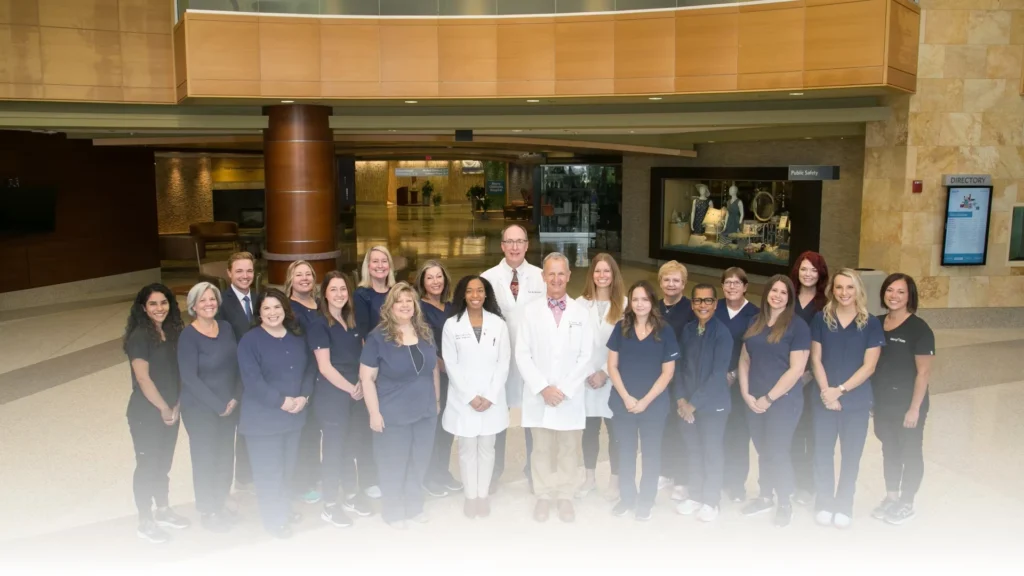
At Dr. Waite & Associates, every tooth evaluation starts with one question: what is best for this patient’s long-term oral health? The team takes time to explain your X-rays, walk through your options, and give you a clear, honest recommendation not a one-size-fits-all answer.
Serving St. Louis and surrounding communities, the practice combines restorative expertise with a commitment to helping patients keep their natural teeth whenever clinically appropriate. Schedule an appointment now!
What Restorative Dentistry Can Actually Do
Saving a tooth: Your options
Modern restorative dentistry has more tools than ever to rescue a damaged tooth:
- Dental filling: For decay or minor damage with structure intact
- Dental crown: Caps and protects a tooth that’s cracked, worn, or post-root canal
- Root canal therapy: Removes infected pulp while preserving the tooth’s outer structure
- Crown lengthening: Exposes more tooth structure to allow a crown to be placed
If extraction is necessary
When a tooth must come out, the conversation doesn’t end there. Tooth replacement is the next step and the options in restorative dentistry today are excellent:
- Dental implant: The most durable, natural-feeling replacement for a single missing tooth
- Dental bridge: A fixed option that anchors to neighboring teeth
- Partial denture: A removable option when multiple teeth are involved
Dental implants, in particular, preserve the jawbone and function nearly identically to a natural tooth. Most patients who go this route are satisfied long-term.
Related Reading: If your tooth cannot be saved and you’re evaluating replacement options, our guide “Considering Dental Implants? Explore the Best Tooth Replacement Options in St. Louis” compares implants, bridges, and dentures to help you understand which solution may be the best fit for your needs.
⭐⭐⭐⭐⭐ Denise Dooling
Got me in quickly, fixed my problem. Everyone was very professional, kind, and friendly. Great experience!
Getting the Right Evaluation in St. Louis
If you’re dealing with tooth pain, a visible crack, or have been told a tooth “might need to come out,” the most important next step is a comprehensive evaluation ideally including a full X-ray and a clear conversation with your dentist.
At Dr. Waite & Associates, serving St. Louis and surrounding areas including South County, West County, and the greater metro region, patients receive a thorough assessment before any treatment decision is made. The goal is always to preserve what’s there and to give you the most honest recommendation when it’s not possible. Call us now to book an appointment!
Frequently Asked Questions
Can a badly decayed tooth be saved?
It depends on how much tooth structure remains and whether the root is healthy. If decay has reached the pulp but the root is intact, a root canal followed by a crown can often save the tooth. If the tooth has broken below the gumline or less than 30% of the structure remains, extraction may be the better path.
Is it better to save a tooth or get an implant?
Saving your natural tooth is almost always preferable when it’s clinically viable. Natural teeth have stronger roots, integrate with the jawbone more effectively, and often perform better long-term. Dental implants are an excellent solution when extraction is unavoidable but they are a replacement, not an upgrade.
How do I know if I need a root canal or extraction?
A dentist determines this based on X-rays and clinical examination. Root canal treatment is typically recommended when the infection is contained within the root and the surrounding bone is healthy. If the infection has spread or the tooth is structurally too compromised, extraction is more likely.
What happens if you leave a tooth that needs to be pulled?
Leaving a damaged or infected tooth in place can allow the infection to spread to neighboring teeth, the jawbone, or in severe cases, the bloodstream. It can also cause the surrounding teeth to shift, creating bite problems and future alignment issues. Timely treatment almost always leads to better outcomes.
Does saving a tooth always require a crown?
Not always. Minor decay or damage may only require a filling. However, if a tooth has had a root canal, is significantly cracked, or has lost a large portion of its structure, a crown is typically needed to protect and restore full function.
How long does a tooth with a crown last?
With proper oral hygiene and regular dental checkups, a well-placed dental crown can last 15 to 25 years or longer. The underlying tooth and supporting gum and bone health play a major role in that longevity.
What is the most important factor in deciding whether to save or remove a tooth?
The structural integrity of the tooth and the health of the surrounding bone are the two most critical factors. A tooth with a healthy root and enough remaining structure can almost always be saved. Once the bone support or root integrity is lost, the long-term prognosis drops significantly.