
St. Louis, MO

Crown vs Filling: Which One Does Your Tooth Actually Need?
If your dentist tells you that you need treatment for a damaged or decayed tooth, one of the first questions that comes to mind is: Do I need a crown or just a filling?
Though both these treatments restore damaged teeth, they serve very different purposes. Choosing the right option depends on how much of the tooth is affected, its strength, and the long-term durability of the tooth restoration.
At Dr. Waite and Associates in St. Louis, our team can help you understand the key differences between crowns and fillings, empowering you to make informed decisions about your dental health and avoid unnecessary complications.
What Is a Dental Filling?
It is used to repair small to moderate areas of tooth decay or damage. After removing the decayed portion of the tooth, the dentist fills the space with composite resin or another restorative material to restore shape and function.
They are ideal when:
- Cavities are small
- Tooth structure is mostly intact
- Damage is limited
- The tooth is still strong
Many patients get to know about fillings when they visit a trusted dentist in St. Louis for routine checkups or to treat early-stage decay.
What Is a Dental Crown?
It is a custom-made cap that fully covers and protects a damaged tooth. It restores strength, shape, and appearance while preventing further breakdown.
They are recommended when:
- A large portion of the tooth is damaged
- Cracks weaken the structure
- The tooth has had a root canal
- A large tooth restoration has failed
- The tooth is severely worn
Patients with significant tooth damage often choose dental crown solutions in St. Louis for long-term protection and stability.
Crown vs Filling: The Real Differences
| Feature | Filling | Crown |
| Coverage | Small area | Entire tooth |
| Strength | Moderate | High |
| Durability | 5–10 years | 10–15+ years |
| Protection | Limited | Full protection |
| Best for | Minor decay | Major damage |
When Is a Filling Enough?
It is typically recommended when:
- Decay is detected early
- Tooth walls are strong
- Structural integrity is intact
- There are no cracks or fractures
In these cases, this dental restoration preserves natural tooth structure and provide a fast, conservative solution.
When Is a Crown the Better Choice?
It is often the best option when:
- Over 40–50% of the tooth is damaged
- The tooth is cracked
- The tooth is weakened after root canal therapy
- A large filling repeatedly fails
At this stage, patients often seek crowns in St. Louis to restore full tooth function and prevent fractures.
What Happens If You Choose the Wrong Option?
Choosing a filling when a crown is needed can lead to:
- Tooth fractures
- Recurrent decay
- Pain and sensitivity
- Infection
- Emergency dental visits
A crown provides full coverage and long-term protection when a tooth is structurally compromised.
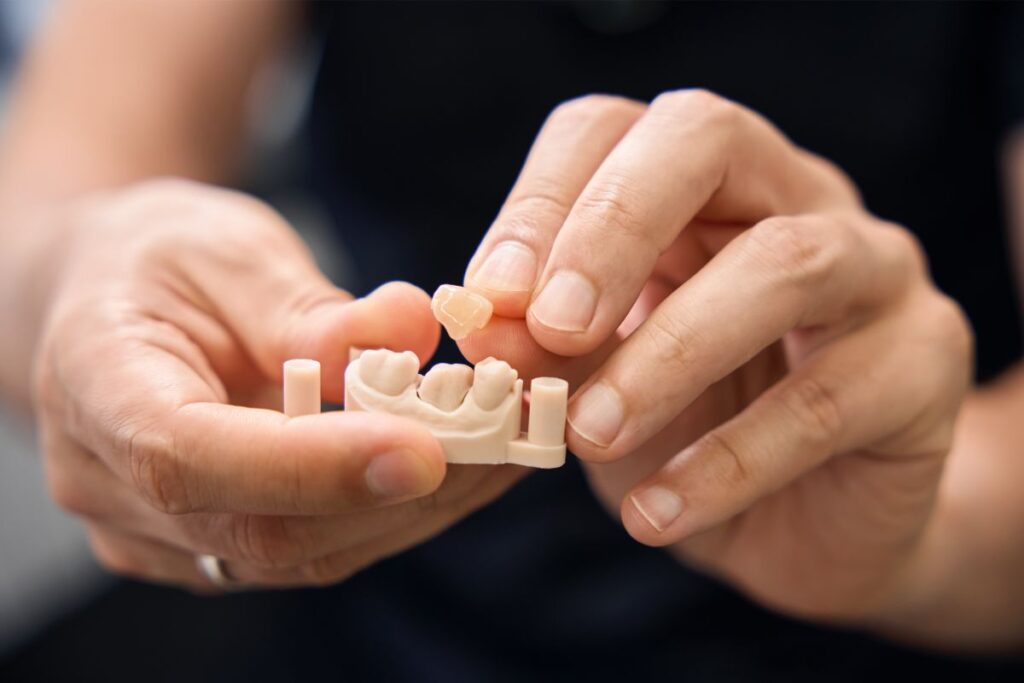
Why Tooth Caps & Bridges Matter for Tooth Stability
Crowns are often used alongside bridges to replace missing teeth. Together, dental caps and bridges help:
- Restore chewing ability
- Prevent teeth shifting
- Maintain bite alignment
- Improve aesthetics
These restorations play a vital role in long-term oral health and smile stability.
How Dentists Decide Between a Tooth Cap and a Filling
Your dentist will evaluate:
- Extent of decay
- Tooth strength
- Bite pressure
- X-ray findings
- Gum health
This comprehensive assessment helps determine whether a filling will suffice or if a dental cap provides better long-term protection.
If you’re unsure about your treatment recommendation, call us today to talk to our expert or book an appointment online to get clarity and peace of mind.
What to Expect During Each Procedure
Dental Filling Process
- Remove decayed tissue
- Clean the area
- Place composite filling
- Shape and polish
This procedure is usually completed in a single visit.
Dental Crown Process
- Prepare the tooth
- Take digital impressions
- Place a temporary crown
- Fit a permanent crown
This usually takes two visits but offers superior long-term results.
How Long Do Caps and Fillings Last?
- Fillings: 5–10 years (depending on care and bite pressure)
- Crowns: 10–15+ years with proper oral hygiene
Patients seeking durability often choose dental crown service to protect their investment in oral health.
Why Early Treatment Matters
Delaying necessary treatment can cause:
- Tooth fractures
- Infection
- Pain
- More expensive procedures
- Emergency dental visits
Addressing decay early preserves your natural tooth and reduces overall treatment costs.
Why St. Louis Patients Trust Modern Crown Solutions
With advanced materials and digital technology, modern crowns are:
- Stronger
- More natural-looking
- Better fitting
- Longer lasting
Advanced dental crowns in St. Louis offer both aesthetics and durability.
Frequently Asked Questions (FAQs)
1. Can a filling replace a crown?
Not if the tooth is structurally weak. Crowns are necessary when large portions of the tooth are compromised.
2. Is a crown more painful than a filling?
No. Modern techniques ensure comfort during both procedures.
3. How do I know which one I need?
A professional dental exam and X-rays determine the best treatment.
4. Can crowns look natural?
Yes. Modern crowns are designed to blend seamlessly with your natural teeth.
5. Are crowns permanent?
They last many years but may eventually need replacement.
Take the Next Step Towards a Healthier Smile with Dr. Waite and Associates
Choosing between a crown and a filling isn’t about preference, it’s about what your tooth actually needs. Early evaluation and the right treatment choice protect your tooth, prevent complications, and save you time and money in the long run. If you’re experiencing tooth pain, sensitivity, or damage, Dr. Waite and Associates, led by Dr. Stuart D. Waite, is here to provide expert guidance and personalized care. Call us today or book an appointment online to take the next step toward a healthier, more confident smile.