St. Louis, MO
Can Bacteria Affect Dental Implant Healing? 7 Myths That Deserve a Closer Look
You have finally replaced a missing tooth. The procedure is over, and now comes the part patients often think about most: Will my dental implant actually heal properly?
One question can create a surprising amount of anxiety: Can bacteria affect dental implant healing?
The short answer is yes- but probably not in the way many dental implant myths suggest.
Your mouth naturally contains hundreds of types of bacteria. The goal is not to create a completely bacteria-free mouth. Instead, successful implant healing depends on controlling harmful bacterial buildup, protecting the healing tissues, managing inflammation, and giving the implant the conditions it needs to integrate with the jawbone.
Research has linked peri-implant disease with changes in the microbial environment around implants and inflammatory responses that can contribute to tissue and bone destruction.
So what is fact, what is myth, and what should you actually do after implant treatment?
Let’s break it down.
First: What Does Bacteria Have to Do With a Dental Implant?
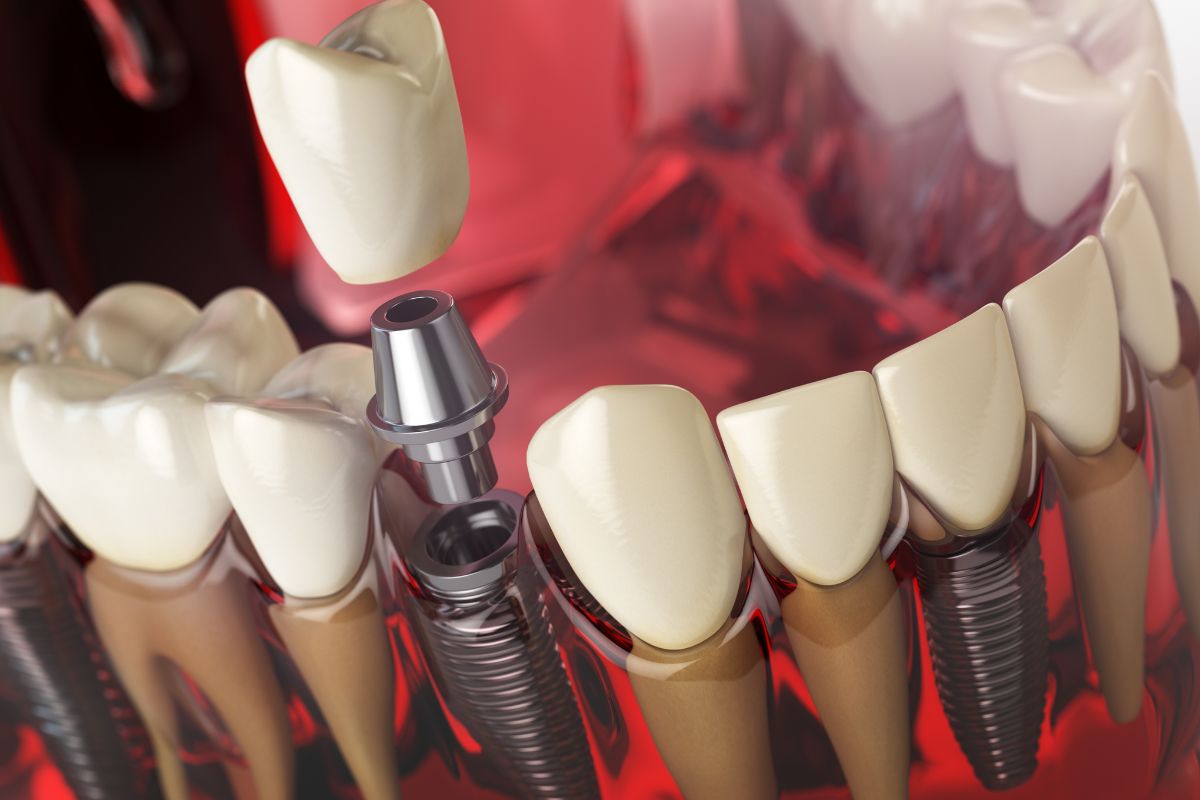
A dental implant is designed to become integrated with the jawbone through a process called osseointegration. During healing, the bone gradually establishes a stable connection with the implant surface.
Bacteria do not automatically prevent this process.
The concern is what happens when harmful bacteria accumulate around the implant and trigger inflammation.
A simple way to think about it is:
Healthy healing → controlled inflammation → tissue repair → bone integration
versus
Persistent bacterial buildup → inflammation → tissue breakdown → possible bone loss
Peri-implant diseases involve complex microbial communities rather than one single “bad” bacterium. Research has found that the microbiota around diseased implants can differ from that around healthy implants, with inflammatory and bone-resorbing processes also becoming more prominent.
That distinction matters because several common dental implant myths oversimplify what is actually happening.
Myth #1: “All Bacteria Are Bad for Dental Implants”
Not exactly.
Your mouth is naturally home to a large and diverse microbial community. You cannot- and should not try to eliminate every microorganism.
The real concern is harmful bacterial accumulation and the inflammation it can trigger.
Plaque can collect around implant-supported teeth just as it can around natural teeth. If it is not adequately controlled, the tissues surrounding the implant can become inflamed.
The progression may involve:
- Plaque accumulation
- Gum inflammation
- Bleeding or tenderness
- Deeper inflammation around the implant
- Loss of supporting bone in more advanced disease
This is one reason oral hygiene remains important even after a missing tooth has been replaced.
An implant may be artificial, but the gum tissue and bone surrounding it are still living tissues.
Myth #2: “If My Implant Doesn’t Hurt, Everything Is Fine”
This is one of the more important myths to understand.
Some problems around an implant may develop without dramatic pain.
Early inflammation may show up as changes that are easy to overlook, such as:
- Bleeding when brushing or cleaning around the implant
- Red or swollen gum tissue
- Persistent bad taste or odor
- Increasing tenderness
- Gum recession
- Changes in how the implant restoration feels
- Progressive bone loss detected during professional evaluation
Bleeding around an implant does not automatically mean peri-implantitis, either. A systematic review found that bleeding on probing can be useful clinically but also has false-positive limitations, meaning dentists need to consider the broader clinical picture rather than relying on one finding alone.
The takeaway: feeling fine is reassuring, but regular dental monitoring still matters.
Myth #3: “Bacteria Only Matter During the First Few Days”
Bacteria can matter throughout the life of an implant.
The early healing period is important because the surgical site is recovering and the implant is beginning its integration with bone. For a closer look at what happens during each stage of recovery, including the foods that may be easier to eat while healing, see our guide to the dental implant healing process, timeline, foods, and what to expect.
But implant maintenance does not end once the initial soreness disappears.
Over time, plaque accumulation and inflammation can contribute to peri-implant diseases. In fact, research describes peri-implantitis as a condition associated with changes in the microbial environment and inflammatory responses that can contribute to bone loss.
Think of implant care as a long-term relationship rather than a short recovery project.
During early healing
The priorities are:
- Following post-operative instructions
- Protecting the surgical site
- Keeping the mouth appropriately clean
- Avoiding behaviors that interfere with healing
- Attending recommended follow-up appointments
After healing
The priorities shift toward:
- Daily oral hygiene
- Professional dental visits
- Monitoring gum and bone health
- Managing plaque
- Addressing problems early
Myth #4: “A Dental Implant Can Get a Cavity”
No, but the tissues around it can still develop problems.
Because an implant is not a natural tooth, the implant itself cannot develop tooth decay.
That does not mean the surrounding mouth is immune to disease.
Natural teeth next to an implant can still develop:
- Tooth decay
- Gum disease
- Enamel wear
- Cracks
- Plaque buildup
The gum and bone supporting the implant can also become inflamed.
This is why replacing a missing tooth does not replace the need for regular oral hygiene.
Your implant may not get a cavity, but your overall oral health still affects the environment around it.
Myth #5: “Antibiotics Prevent All Implant Problems”
This is another misconception worth correcting.
Antibiotics may be appropriate in specific clinical situations, but they are not a substitute for plaque control, professional monitoring, or proper treatment planning.
Research into antibiotics for peri-implant diseases continues to examine how systemic antibiotics affect clinical and microbiological outcomes, reflecting the fact that management is more complex than simply taking an antibiotic.
In other words:
Antibiotics ≠ permanent protection from bacteria.
Your dental professional may prescribe medication when clinically appropriate, but patients should not assume that antibiotics can replace good oral hygiene or follow-up care.
Myth #6: “Implant Failure Is Always Caused by Bacteria”
No. Implant outcomes are multifactorial.
Bacteria and inflammation can play an important role, but they are not the only factors that can influence healing and long-term stability.
Other considerations may include:
- Bone quantity and quality
- Gum health
- Existing periodontal disease
- Smoking or tobacco use
- Certain medical conditions
- Implant position
- Bite forces
- Oral hygiene
- Surgical and restorative factors
- Patient-specific healing characteristics
Recent research continues to emphasize this multifactorial nature of peri-implant health. A 2026 systematic review examining implant surface characteristics concluded that long-term outcomes are influenced by interactions among host, microbial, and clinical factors rather than implant surface characteristics alone.
That is important because it changes how we think about implant success.
There is rarely one single explanation.
Myth #7: “Once the Implant Heals, I Don’t Have to Think About It”
This may be the most expensive myth to believe.
A successfully healed implant still needs maintenance.
The implant restoration should be cleaned regularly, and the surrounding gum tissue needs attention just like the rest of your mouth.
A long-term maintenance routine may include:
- Brushing twice daily
- Cleaning between teeth and around the implant as recommended
- Keeping natural teeth healthy
- Managing gum disease
- Attending routine dental examinations
- Following individualized implant-care instructions
- Reporting unusual bleeding, swelling, discomfort, or looseness
Dr. Waite & Associates also emphasizes continued oral hygiene around implants because bacterial buildup can contribute to gum disease and bone loss.
So, Can Bacteria Affect Dental Implant Healing?
Yes. Harmful bacterial accumulation can contribute to inflammation around an implant, and persistent inflammation may affect the tissues and bone supporting it. However, bacteria are only one part of a much larger picture involving oral hygiene, gum health, bone, healing, lifestyle factors, and professional care.
The goal isn’t to make your mouth bacteria-free.
The goal is to create and maintain a healthy environment in which your implant and surrounding tissues can heal and remain stable.
What Can You Do to Support Healthy Implant Healing?
There is no single trick that guarantees implant success. Instead, focus on the basics that protect the surgical site and surrounding tissues.
1. Follow your dental professional’s instructions
Your post-operative instructions are specific to your procedure and your health.
Don’t replace those instructions with advice from a random online forum or social media video.
2. Keep plaque under control
Your dental team can show you how to clean around your implant without disturbing healing tissues.
3. Don’t ignore gum problems
Existing gum disease can affect the environment in which an implant is placed and maintained. Recent research has also investigated residual periodontal pockets as a potential risk indicator for peri-implantitis.
4. Keep your follow-up appointments
Your dentist can evaluate healing, gum health, the restoration, and when indicated changes in supporting bone.
5. Tell your dentist about changes
Contact your dental office if you notice persistent bleeding, swelling, drainage, unusual discomfort, bad taste, or a change in how your implant restoration feels.
Early evaluation is generally more useful than waiting for a problem to become obvious.
Bacteria, Gum Disease, and Dental Implants: What Is the Difference?
| Condition | What is happening? | Why it matters |
| Healthy implant tissues | Tissues around the implant remain stable | Supports long-term function |
| Peri-implant mucositis | Inflammation is present around the soft tissues | Can require attention before it progresses |
| Peri-implantitis | Inflammation is associated with supporting bone loss | Requires professional evaluation and treatment |
| Tooth decay | Bacterial acids damage natural tooth structure | Does not occur on the implant itself, but neighboring teeth remain vulnerable |
This is also why an implant should never be treated as a completely separate object from the rest of your mouth.
Your gums, natural teeth, bite alignment, oral hygiene, and overall oral health all interact.
What Should St. Louis Patients Know About Implant Healing?
For patients in St. Louis, the most useful question is not simply, “Can bacteria affect dental implant healing?”
A better question is:
“What does my mouth need to heal properly, and how will we monitor it?”
If you’re still deciding whether an implant is appropriate for you, you can also review 7 signs you may be ready for dental implants and what St. Louis patients should do next to better understand the factors to discuss with your dental professional.
At Dr. Waite & Associates, implant treatment begins with evaluation rather than assumptions. The practice provides dental implant treatment and evaluates factors such as jawbone condition and gum health when determining whether implant treatment is appropriate.
Don’t Let an Implant Myth Make the Decision for You
Dental implants can feel like a major commitment, which makes it tempting to search for one simple rule: avoid bacteria, take antibiotics, brush more, or just wait and see.
Real implant care is more nuanced.
Bacteria matter. But they are only one piece of the puzzle.
Healthy gum tissue, adequate bone, appropriate treatment planning, oral hygiene, professional monitoring, and your individual health all play a role in creating the right environment for healing.
If you’re considering an implant or you’re already healing and something doesn’t seem right getting an individualized evaluation is more useful than trying to diagnose the problem from an online checklist.
Ready to Get a Professional Opinion?
If you’re in St. Louis and have questions about implant healing, gum health, or the next step after losing a tooth, schedule a consultation with Dr. Waite & Associates.
A professional evaluation can help you understand what is happening around your implant, what your mouth needs next, and how to protect your long-term oral health. Call us to schedule an appointment!
Frequently Asked Questions About Bacteria and Dental Implant Healing
1. Can bacteria affect dental implant healing?
Yes. Harmful bacterial buildup can contribute to inflammation around an implant. Persistent inflammation may affect the gum tissue and supporting bone. However, bacteria are only one factor in implant healing, along with bone health, gum health, oral hygiene, lifestyle factors, and treatment planning.
2. Can a dental implant get infected?
Yes. The tissues surrounding a dental implant can become infected or inflamed. Conditions such as peri-implant mucositis and peri-implantitis can affect the tissues around an implant. Persistent swelling, bleeding, drainage, discomfort, or other changes should be evaluated by a dental professional.
3. Can poor oral hygiene cause dental implant problems?
Poor oral hygiene can allow plaque and bacteria to accumulate around an implant. This can contribute to inflammation and may increase the risk of peri-implant disease. Regular cleaning and professional maintenance are important for protecting the tissues around an implant.
4. Can dental implants fail because of bacteria?
Bacterial infection and inflammation can contribute to implant complications, but implant failure is usually considered multifactorial. Gum health, bone condition, smoking, certain health conditions, bite forces, implant placement, hygiene, and other clinical factors can also influence outcomes.
5. Do antibiotics prevent dental implant infection?
Antibiotics may be recommended in specific situations, but they do not eliminate the need for oral hygiene or professional monitoring. Your dentist will determine whether antibiotics are appropriate based on your individual circumstances.
6. What are signs of infection around a dental implant?
Possible warning signs include persistent swelling, redness, bleeding, tenderness, drainage, bad taste or odor, or changes in the way the implant restoration feels. These symptoms do not automatically confirm an infection, so a dental examination is needed for an accurate diagnosis.
7. How can I protect my dental implant after it heals?
Maintain good oral hygiene, clean around the implant as instructed, attend regular dental visits, manage gum disease, and report unusual changes promptly. Long-term implant health depends on maintaining the tissues surrounding the implant, not simply getting through the initial healing period.
8. Is bacteria the only risk factor for dental implant failure?
No. Implant outcomes can be influenced by several factors, including bone and gum health, smoking, medical conditions, oral hygiene, bite forces, implant placement, and other patient-specific or clinical factors. Your dental professional can evaluate these factors before and during treatment.