
St. Louis, MO
Why Do Your Teeth Feel Fine Until You Eat Something Cold?
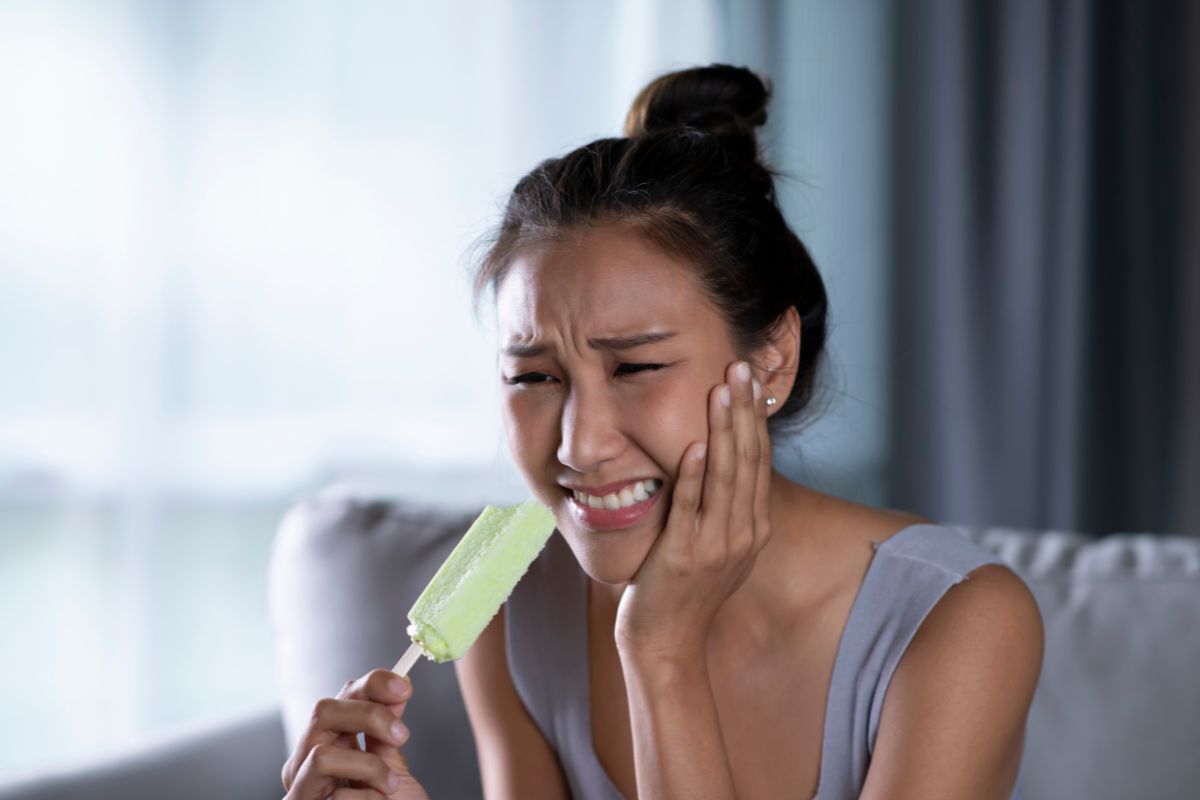
It’s a warm St. Louis evening, the kind where a scoop of ice cream feels non-negotiable. You take the first bite and, out of nowhere, a sharp jolt shoots through one tooth and stops you mid-sentence. Yesterday your teeth felt completely fine. Today, cold food or drinks feel like a gamble. If that sudden shift sounds familiar, you’re not imagining it, and you’re far from alone.
That jolt has a name, cold sensitivity, and it’s one of the most common reasons patients search for why their teeth hurt with cold food in the first place. The good news: sensitivity like this almost always has a clear, treatable cause once a dentist in St. Louis takes a look.
The Moment Cold Food Turns Painful
What makes cold sensitivity so unsettling isn’t just the pain itself – it’s how suddenly it shows up. Teeth that handled coffee, soup, and popsicles without complaint for years can start reacting overnight. That abruptness is exactly why so many people brush it off as a fluke, hoping it fades on its own.
Sometimes it does. More often, sudden sensitivity is your tooth telling you that its protective layer has been compromised in some way, and the nerve underneath is now exposed to temperature changes it was never meant to feel directly.
Why Sudden Sensitivity Matters More Than It Seems
Every tooth has a hard outer shell of enamel protecting a softer, porous layer called dentin, which surrounds the nerve at the tooth’s core. As long as enamel stays intact, dentin stays insulated and cold doesn’t register as pain. When enamel thins, cracks, or gum tissue pulls back and exposes the root, cold liquids and food reach the dentin directly — and that’s when you feel it.
| DID YOU KNOW? |
| Enamel is the hardest tissue in the human body – harder than bone. But unlike bone, it cannot repair or regenerate itself once it’s worn away, which is why early attention to sensitivity matters so much for long-term oral health. |
What’s Really Behind Teeth That Hurt With Cold Food
Cold sensitivity isn’t one single problem- it’s a symptom with several possible root causes. Here are the ones dentists see most often:
Enamel Erosion
Acidic foods, sugary snacks, and even aggressive brushing can gradually wear enamel thin, especially near the gumline where it’s already at its most fragile.
Gum Recession
When gum tissue pulls back- from brushing too hard, gum disease, or age it exposes the tooth root, which has no enamel covering it at all and is far more sensitive to temperature.
Cracked Tooth or Old Filling
A hairline crack or a filling that’s loosened over time can create a direct pathway for cold to reach the nerve, often causing pain specifically when biting down.
Not every sharp pain from cold means simple sensitivity. In some cases, a tiny crack is the real culprit. Learn how to tell the difference in our guide, “Cracked Tooth vs Sensitivity: The Fastest Way to Tell What Your Tooth Is Trying to Warn You About.“
Tooth Decay
Cavities erode enamel from the inside out. Sensitivity is frequently one of the first noticeable signs, appearing before any visible damage.
Teeth Grinding (Bruxism)
Nighttime grinding wears enamel down gradually and can stress teeth enough to create micro-cracks, both of which contribute to cold sensitivity building slowly over months.
Signs it’s time to stop waiting and get checked:
- Lingering pain: Pain lingers well after the cold food or drink is gone
- Localized pain: Discomfort is isolated to one specific tooth
- Pain while biting: Sensitivity appears when biting down, not just with temperature
- Visible changes: You notice swelling, a visible chip, or discoloration nearby
How a Dentist Diagnoses and Treats Cold Sensitivity
Because so many different issues can cause the same symptom, an in-person exam is really the only reliable way to know what’s actually happening in your mouth. A dentist will typically check for enamel wear, gum recession, cracks, and decay, and may take an X-ray to rule out anything happening below the surface.
Depending on the cause, treatment options can include:
- Fluoride treatments: applied in-office to strengthen enamel and calm nerve response quickly
- Desensitizing agents or prescription toothpaste: that seal exposed dentin at home between visits
- Bonding: to cover an exposed area or repair a small crack
- Fillings or crowns: using restorative dentistry when a filling has failed or decay has set in
- Gum grafting: to rebuild tissue and protect the exposed root when needed
Most patients feel meaningfully better within one or two visits – sensitivity that seems dramatic in the moment is rarely as complicated to resolve as it feels.
Trusted Cold Sensitivity Care in St. Louis
At Dr. Waite and Associates, we see this exact scenario often: a patient who felt completely fine until, suddenly, they didn’t. Our Complete Health Dentistry approach means we don’t just treat the sensitive tooth in isolation — we look at your bite, your gum health, and your habits together, so the sensitivity doesn’t just come back in a different spot six months later.
We work with patients across St. Louis and neighboring communities like Clayton and Kirkwood, and cold sensitivity is one of the most common concerns that brings people in for a first visit. If it’s been a while since your last checkup, this is a comfortable, low-pressure way to get back on track. Call us to schedule an appointment!
Meet Dr. Waite

Dr. Stuart Waite takes a patient-first approach built on listening before diagnosing. “When someone tells me a tooth that used to feel fine suddenly hurts, that change itself is diagnostic information,” Dr. Waite explains. “Our job is to find out what shifted and fix that, not just numb the symptom.” Patients consistently describe visits at Dr. Waite and Associates as unhurried and clearly explained, with treatment plans that make sense before any decision gets made. Contact us to schedule a consultation with Dr. Waite to find out what’s behind your sensitivity.
Cold Sensitivity: Normal Reaction or Warning Sign?
A quick, mild reaction to something very cold that fades within seconds is usually nothing to worry about. Pain that lingers, returns with every cold exposure, or shows up when you bite down is a sign that enamel, a filling, or gum tissue needs a closer look.
| Symptom | Likely Cause | When to See a Dentist |
|---|---|---|
| Brief zing from ice water, fades in seconds | Mild enamel wear or a new whitening product | Routine checkup within your normal schedule |
| Sharp pain that lingers 30+ seconds after cold | Exposed dentin, gum recession, or a deep cavity | Within 1–2 weeks |
| Pain only when biting down on cold food | Possible cracked tooth or loose filling | As soon as possible |
| Sensitivity plus swelling, throbbing, or fever | Possible infection or abscess | Same day / emergency visit |
Protecting Your Oral Health Beyond the Sensitive Tooth
Cold sensitivity is rarely just about one tooth – it’s usually connected to your broader oral health. Enamel strength, gum health, bite alignment, and even the fit of an old dental crown all influence how your teeth respond to temperature. Left unaddressed, the same conditions that cause sensitivity, like gum disease or tooth decay, can also affect your smile’s appearance over time. Treating the sensitivity early is also a chance to catch smaller issues before they require more involved restorative dentistry down the road.
Cold sensitivity isn’t the only subtle warning sign your teeth can give. If food repeatedly gets trapped between the same two teeth, it may also indicate an underlying dental issue. Read “Why Food Keeps Getting Stuck Between the Same Two Teeth“ to learn what it could mean.
Frequently Asked Questions
1. Why do my teeth suddenly hurt when I eat something cold?
Sudden cold sensitivity usually means the dentin layer beneath your enamel has become exposed due to enamel wear, a small crack, or gum recession. When cold food or drinks reach this sensitive layer, the nerves inside your tooth react, causing a sharp, temporary pain.
2. Is it normal for teeth to be sensitive to cold food and drinks?
A brief, mild reaction to something very cold can be normal. However, if the sensitivity appears suddenly, becomes more frequent, or lingers after the cold is gone, it may indicate an underlying dental issue that should be evaluated by a dentist.
3. Can tooth sensitivity to cold go away on its own?
Mild sensitivity caused by teeth whitening or acidic foods may improve after the trigger is removed. Sensitivity caused by enamel erosion, cavities, cracked teeth, or exposed roots usually requires professional treatment and is unlikely to resolve on its own.
4. What toothpaste works best for cold-sensitive teeth?
Toothpastes containing potassium nitrate or stannous fluoride are designed to reduce tooth sensitivity by blocking nerve signals or sealing exposed dentin. While they can relieve symptoms, they won’t treat problems like cavities, cracks, or gum recession.
5. Does tooth sensitivity to cold always mean I have a cavity?
No. Although cavities are a common cause, cold sensitivity can also result from enamel erosion, gum recession, teeth grinding, cracked teeth, worn fillings, or recent dental procedures. A dental examination is the best way to determine the exact cause.
6. How long should tooth sensitivity last after a filling or dental cleaning?
It’s common to experience mild sensitivity for up to one or two weeks after a filling, cleaning, or whitening treatment. If the discomfort persists beyond that or becomes more severe, schedule a follow-up visit with your dentist.
7. Can grinding my teeth at night cause sensitivity to cold?
Yes. Nighttime teeth grinding (bruxism) gradually wears down enamel and may create tiny cracks that expose the dentin beneath the surface. Over time, this can make your teeth increasingly sensitive to cold temperatures.
8. When should I see a dentist for cold-sensitive teeth?
You should schedule a dental appointment if the pain lingers after the cold stimulus is gone, affects one specific tooth, occurs while biting down, or is accompanied by swelling, discoloration, or a visible crack. These symptoms often indicate a problem that requires professional treatment.