
St. Louis, MO
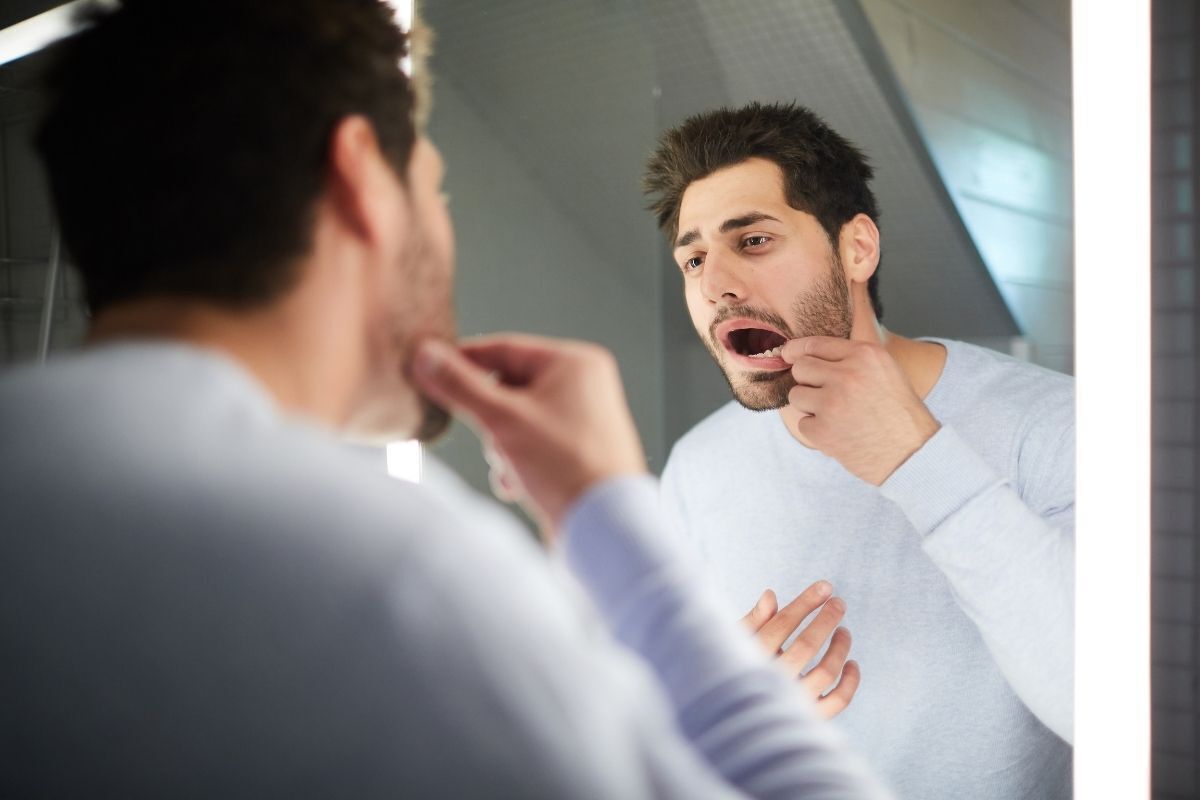
Why Food Keeps Getting Stuck Between the Same Two Teeth
It always happens at the worst moment – mid-laugh, mid-meeting, mid-first date. You order the same sandwich you always order, and somehow you end up with food stuck between teeth in that exact same spot, every single time.
You’ve started keeping floss picks in your glovebox. You’ve learned the discreet tongue-and-cheek maneuver to clear it without anyone noticing. It feels like a small, almost funny problem until you stop and realize it’s always the same two teeth.
That repetition is the part worth paying attention to. Food getting caught once in a while is normal. The same spot, meal after meal, usually means something has physically changed between those two teeth and it rarely fixes itself on its own. At Dr. Waite and Associates in St. Louis, this is one of the most common things patients mention almost as an afterthought, right before a routine exam uncovers the real cause.
It’s Not Bad Luck – Something Has Actually Changed
Teeth are built to sit against each other at a tight, even contact point. That snug seal is what keeps food sliding past your teeth instead of packing into them. When that contact point changes, even by a fraction of a millimeter, food finds the opening every time.
A few things can quietly reshape that space:
- Receding gums — Gum tissue pulling back and opening a small triangle below the contact point
- A drifting gap — Teeth shifting so a gap between teeth slowly widens over months or years
- An aging restoration — A filling or crown that has worn down or lost its original shape
- Early tooth decay — Decay softening the tooth and changing its contour
None of these happen overnight. That’s exactly why food getting stuck between teeth in the same spot is often the very first sign people notice — long before there’s ever any pain.
Why This Small Habit Is Worth Paying Attention To
A single stray popcorn kernel isn’t a dental emergency. But food trapped in the same spot, day after day, creates steady buildup of plaque and bacteria in a place your toothbrush can’t fully reach. Over weeks and months, that trapped debris can irritate the gum tissue, soften enamel, and slowly widen the very gap that’s causing the problem in the first place — a frustrating cycle that only gets harder to ignore.
This pattern is also one of the earliest, mildest gum recession symptoms. Long before recession causes sensitivity or a visibly longer-looking tooth, it often shows up first as food packing into a spot that used to feel perfectly normal. Catching it here, at the annoying-habit stage, is far easier than catching it later.
Food getting trapped between the same two teeth is just one example of the subtle changes your mouth can reveal. If you’ve also noticed your teeth looking slightly longer, your bite feeling different, or new sensitivity, you may be seeing other early warning signs. Read “7 Small Smile Changes That Could Mean Bigger Dental Problems“ to learn what else your smile could be trying to tell you.
| Did You Know? Gum recession affects a large share of adults over 30 and food packing into one specific spot is often the very first symptom people notice, well before any sensitivity or visible change. |
What Could Actually Be Causing It
Gum Recession Opening a Small Gap
When gum tissue pulls back from a tooth, it can open a tiny triangular space right where two teeth meet just large enough for food to lodge in. This is one of the more common gum recession symptoms patients describe: ‘food gets stuck there now, but it never used to.’ Recession can be caused by brushing too hard, gum disease, teeth grinding, or genetics, and it tends to progress slowly and quietly.
A Gap Between Teeth That’s Slowly Widening
Teeth shift more than most people realize, especially without a retainer or as bone density changes with age. A gap between teeth that was barely noticeable a few years ago can widen just enough to start trapping food at nearly every meal — especially between the lower front teeth or in spots where a tooth was lost or has moved.
A Worn or Aging Filling
Fillings and crowns are shaped to match the tight contact point of a natural tooth, but that shape wears down over years of chewing. Once it does, the smooth seal between two teeth turns into a small ledge or gap — and food finds it every time.
Decay You Can’t See Yet
Cavities that form between teeth are notoriously hard to spot in a mirror. As decay softens the tooth structure, it can change the shape of the contact point, creating a rougher surface or small notch where food catches. This is one reason a stuck-food pattern is worth a dental exam rather than a home remedy alone — a simple X-ray can catch it before it ever reaches the nerve.
What a Dental Exam Actually Solves
A short exam with digital X-rays usually identifies the cause within minutes — whether it’s gum recession, a widening gap between teeth, a worn filling, or early decay between teeth. From there, treatment is often more straightforward than people expect.
Once the underlying issue is corrected, preventing future food traps often comes down to small daily habits that many people overlook. Discover “The One Dental Habit Even the Best Smiles Quietly Skip“ to learn a simple routine that helps protect healthy teeth and gums over the long term.
Depending on what’s found, care may include:
- Repairing or replacing a worn filling to restore a tight, natural contact point
- Treating decay early, often with a simple filling instead of a larger procedure later
- Scaling and root planing to address gum irritation tied to recession
- A cosmetic or orthodontic evaluation if a gap between teeth is the underlying cause
- A custom night guard if teeth grinding is contributing to gum or tooth wear
Most patients are relieved to learn the fix is smaller than the daily annoyance made it feel.
St. Louis Families Have Trusted This Practice for Years
Dr. Waite and Associates has provided personalized dental care for thousands of families throughout the St. Louis area from our hospital-housed office on New Ballas Road. The team uses digital imaging and CEREC same-day crown technology, so a worn filling or early cavity can often be addressed in a single visit instead of dragging out over weeks.
Patients often come in for one small, specific complaint like food getting stuck in the same spot and leave with a clear, honest answer about what’s really going on, not just a quick fix for the symptom.
| Tired of Digging Food Out of the Same Spot? A quick exam can tell you exactly what’s changed and how simply it can be fixed. Contact us to request an appointment! |
Food Stuck Between Teeth: Quick Comparison
Food packing into the same spot usually traces back to one of four causes. Here’s a quick way to compare them:
| Possible Cause | What It Feels Like | What It Usually Means |
|---|---|---|
| Gum recession | Food catches near the gumline; the tooth may look slightly longer | Gum tissue has pulled back, opening a small gap |
| Gap between teeth | Food wedges between the same two teeth almost every time | Teeth have shifted or drifted apart over time |
| Worn filling or crown | Food catches at the same spot after eating almost anything | The restoration has lost its original tight, sealed shape |
| Decay between teeth | Food catches and may bring mild sensitivity or a dull ache | An early cavity is changing the tooth’s shape |
| Stop Wondering What’s Behind It — Find Out for Sure Dr. Waite and Associates is currently welcoming new patients in St. Louis. A short visit now can save you from a bigger fix later. Call Us to Book an Appointment! |
Frequently Asked Questions
1. Why does food keep getting stuck in the same spot between my teeth?
It usually means something has changed at the contact point between those two teeth, such as gum recession, a widening gap, a worn filling, or early decay. A dental exam can identify the exact cause and recommend the right treatment.
2. Is it normal for food to get stuck between my teeth every day?
Occasionally getting food stuck between your teeth is normal. However, if it happens in the exact same spot at nearly every meal, it often indicates a specific issue that should be evaluated by your dentist.
3. Can a small gap between my teeth cause food to get trapped?
Yes. Even a very small gap can create enough space for food to collect, especially fibrous foods like meat, popcorn, or leafy greens. Teeth can gradually shift over time, making these gaps more noticeable.
4. What are the early signs of gum recession?
One of the earliest signs of gum recession is food consistently getting trapped in a spot where it never used to. You may also notice mild tooth sensitivity or teeth that appear slightly longer as the gums recede.
5. Does food getting stuck between my teeth always mean I have a cavity?
Not necessarily. While decay between teeth can change the tooth’s shape and trap food, other causes such as gum recession, tooth movement, or worn dental restorations can produce the same symptom. A dental exam and X-rays can determine the underlying cause.
6. How can I stop food from getting stuck between the same teeth?
Flossing can help remove trapped food, but it won’t correct the underlying problem. Depending on the cause, treatment may involve repairing a worn filling, treating gum disease, addressing tooth movement, or restoring the contact point between the teeth.
7. When should I see a dentist about food getting stuck between my teeth?
If food has been getting trapped in the same location for more than a few weeks, or if you notice sensitivity, gum tenderness, swelling, or changes in your bite, it’s time to schedule a dental evaluation before the problem worsens.
8. Can gum recession be reversed?
Gum tissue generally does not grow back on its own. However, early treatment can stop recession from progressing, improve your oral health, and help prevent additional damage. In some cases, your dentist may recommend procedures to restore or protect the affected area.